It’s 3:14 AM. You’re sitting in a dim nursery, the only light coming from the faint blue glow of a diaper warmer and the streetlamp outside. Your baby finally drifted back to sleep, but your mind is racing. Wait, did he just feed for ten minutes or twenty? Which side did I start on? And when was his last wet diaper?
If you can’t answer those questions, don’t beat yourself up. You aren't failing; you're experiencing the biological reality of early parenthood. Sleep deprivation doesn't just make you tired; it fundamentally rewires how your brain processes short-term information. In this haze, your hippocampus—the part of the brain responsible for memory—is essentially running on a low-battery mode.
This is where the "Mindful Data Parent" approach comes in. It isn't about being obsessed with numbers or trying to turn your infant into a spreadsheet. It’s about offloading the mental heavy lifting to a baby tracker app so you can focus on what actually matters: connecting with your child without the constant nagging fear that you've forgotten a vital detail.
The 3 AM Fog: Why We Track in the First Place
New parents are often bombarded with advice to "just trust your instincts." While well-intentioned, this ignores a simple truth: instincts are hard to hear when you’re running on three hours of broken sleep. When a baby is crying at 2 AM, your brain goes into a high-alert triage mode. Is he hungry? Is he tired? Is he wet?
The Cognitive Cost of New Parenthood
Research indicates that the "mental load"—the invisible labor of managing a human life—is a primary driver of postpartum burnout. When you try to keep a running tally of ounces, minutes, and nap durations in your head, you’re using up precious cognitive "RAM" that you need for emotional regulation. If you’ve ever found yourself crying because you couldn't find the TV remote, that’s your mental load reaching its limit.
From Guesswork to Knowing
Using a baby tracking app acts as an external hard drive for your memory. Instead of agonizing over whether it's been two hours or four since the last bottle, you check the log. This simple act of outsourcing memory reduces cortisol levels. You move from a state of "I think he might be hungry" to a state of "I know he ate 90 minutes ago, so this is likely a sleep cue." That clarity is the foundation of parental confidence.
The Psychology of Tracking: Reducing the Mental Load
I’ve spoken to hundreds of parents who initially felt that tracking was just "one more chore" on an already impossible list. But after a week of using the best baby tracking app, that feeling almost always shifts. The app isn't a taskmaster; it’s a buffer against decision fatigue.
Defeating Decision Fatigue
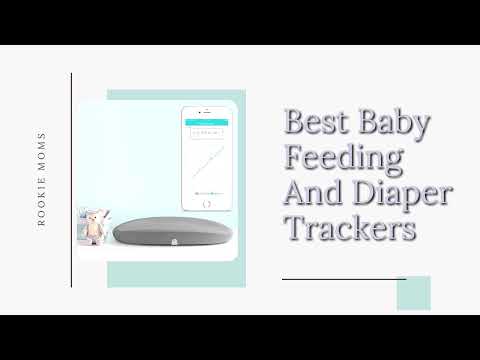
Every decision you make—no matter how small—depletes your willpower. By 4 PM, most parents are running on empty. If you have to decide if a baby's fussiness is due to hunger or overstimulation, and you don't know when they last napped, you're forced to make a high-stakes guess. A quick glance at your newborn tracker log removes the guesswork. If they haven't napped in three hours, the answer is right there. Decision made. Energy saved.
The 'Second Brain' Concept
In productivity circles, people use a "Second Brain" to store ideas. In parenting, your tracker is your Second Brain. It holds the data so you can hold the baby. This is especially vital for the 20% of mothers who experience postpartum anxiety, as having objective data can provide a necessary reality check when the mind begins to spiral into "what if" scenarios. It’s hard for anxiety to tell you the baby is starving when the app shows they’ve had 28 ounces today.
Neuro-Responsive Tracking: Data That Respects the Baby
We need to draw a line between "old school" tracking and modern methods. In the past, tracking was often used to force babies into rigid, 4-hour schedules. I advocate for something different: Neuro-Responsive Tracking. This means you track to understand your baby’s unique biological rhythms—their "cues"—rather than trying to change them.
Ditching the Rigid Schedule
Babies aren't machines. A growth spurt might mean they need to eat every 90 minutes today, even if they ate every 3 hours yesterday. If you follow a rigid clock, you’ll miss these signals and end up with a frustrated baby. But if you use a baby feeding tracker app free, you’ll start to see the pattern of the growth spurt emerging. You aren't watching the clock; you're watching the trend.
Decoding Baby’s Cues with Trends
Sometimes a baby’s cues are confusing. Is that a "hunger" cry or a "change me" cry? By looking at your baby care app, you can see that for the last three days, your baby has consistently become fussy at the 90-minute mark after waking. That’s not hunger; that’s their "sleep window" closing. Data helps you translate their cries into needs before they reach the point of an overtired meltdown.
The 'Big Three' Patterns: What Your Data is Actually Telling You
Logging data is useless if you don't know how to interpret it. Focus on these three core metrics to get 80% of the value out of any app.
Feeding Efficiency and the 20% Rule
Whether you are breastfeeding or bottle-feeding, look for your baby’s baseline. Every baby is different, but they are usually consistent with themselves. If your baby typically eats 30 ounces a day and suddenly drops to 24 ounces (a 20% drop) for two consecutive days, that is a signal to pay closer attention. It might be a simple distraction or a minor cold, but the baby tracker gives you an "early warning system" to check for other symptoms like fever or lethargy.
Sleep Consolidation vs. Regression
Parents fear the word "regression." But data often shows that what feels like a regression is actually a shift. Use your baby sleep tracker to look at "Total Sleep in 24 Hours." Often, a baby might start waking up more at night, but they are taking longer naps during the day. This insight can prevent you from making drastic changes out of panic. The National Sleep Foundation emphasizes that sleep needs evolve rapidly, and tracking helps you adapt to these shifts.
Elimination Trends: The Hydration Story
The American Academy of Pediatrics (AAP) notes that diaper count is the most reliable way for parents to monitor hydration. A feeding and diaper log allows you to see the "wet diaper curve." Generally, you're looking for 6+ heavy wet diapers every 24 hours after the first week of life. If that curve flattens out, you have objective evidence to bring to a medical professional immediately.
The Pediatrician Power-User: Navigating Well-Child Visits
Have you ever been to a 2-month checkup and the doctor asks, "How is the feeding going?" and your mind goes completely blank?
The 3-Minute Summary Script
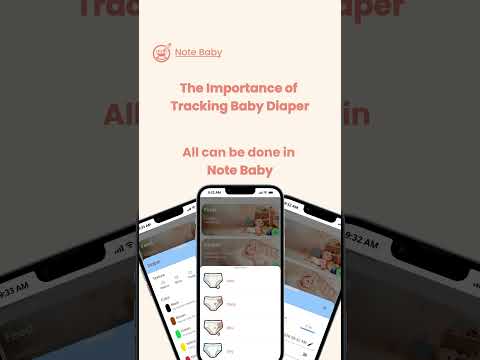
Before your next visit, use your best baby tracker app to export a summary or look at the 7-day averages. Don’t hand the doctor your phone; instead, use this script:
"In the last 14 days, he’s averaging 8 feeds per day and 6 wet diapers. However, I’ve noticed that in the last 4 days, his nighttime sleep has dropped from a 5-hour stretch to 2-hour stretches. Is this consistent with a growth spurt?"
Turning 'I Think' into 'I Know'
Pediatricians love data when it’s presented clearly. If you think your baby has reflux, showing a log that correlates "Feeding" with "Fussiness/Spit-up" events over a 72-hour period is far more effective. The CDC provides milestones and growth charts that complement your daily tracking, allowing for a complete picture of health.
Predictive Parenting: Spotting Spurts and Regressions Before They Hit
One of the most rewarding parts of being a mindful data parent is the ability to see the future. Most "growth spurts" are preceded by a day or two of "cluster feeding" or increased sleepiness.
When you track baby growth through your app and see a sudden spike in feeding frequency, you can tell yourself: "Okay, a spurt is coming. I’m going to prep some extra snacks for myself." That’s using data for self-care, not just baby care.
Avoiding 'The Data Trap': When to Put the Phone Down
I would be doing you a disservice if I didn't address the dark side: "Data-Driven Anxiety." For some parents, the act of logging becomes a compulsion.
The Anxiety Check Protocol
Ask yourself these three questions honestly:
- Is this data helping me make a decision, or just making me worry?
- Am I looking at my phone more than I’m looking at my baby’s face?
- Would the world end if I didn't log this specific diaper?
If the tracking is increasing your stress rather than reducing it, take a 24-hour "tracking fast." Your baby tracking app is a tool, not a master.
Trusting Your Biological App: Intuition
Your intuition is a biological algorithm developed over millions of years. The app is there to verify your intuition, not replace it. If the app says your baby should be tired but the baby is happy and playing, trust the baby. Always trust the baby over the data.
Scenario Guides: Tracking for Specific Challenges
The Reflux Log: Identifying Triggers
For babies with Gastroesophageal Reflux (GER), tracking is a lifeline. According to the Mayo Clinic, identifying triggers is key to management. By using your baby health tracker, you can track variables like position after feeding and the timing of medication.
Co-Parenting and Caregiver Transitions
If you are returning to work, a shared parenting app is the ultimate bridge. When the nanny or partner logs a nap, you get a notification. This isn't about micromanaging; it’s about staying in sync with your baby routine app so transitions are seamless.
Frequently Asked Questions
What is the best baby tracker app for new parents?
The best app is one that is intuitive, allows for multi-user syncing, and provides clear data visualizations rather than just raw logs. It should reduce your mental load, not add to it.
When should I stop tracking my baby's feedings and diapers?
Most parents find that tracking is most vital in the first 3 to 6 months. Once a routine is established and growth is steady, you may choose to only track specific events like medicine or milestones.
Can baby tracking apps help with sleep training?
Yes, by using a baby sleep tracker, you can identify natural "sleep windows" and biological rhythms, making it much easier to implement gentle sleep routines based on your baby's actual needs.
Conclusion
As your child grows, the intensity of tracking will naturally fade. However, the habit of being a "Mindful Data Parent"—someone who observes patterns and values objective information—will stay with you. Using a baby tracker app isn't about control; it's about clarity. It's about having the information you need at 3 AM so you can stop worrying and start resting. The logs you create are a record of your dedication, helping you understand your tiny human better every day.