It’s 3:14 AM. You’re staring at a damp diaper, trying to remember if the last feeding started on the left or right side—or if it even happened at all. Sleep deprivation doesn't just make you tired; it wipes your mental hard drive. In the haze of early parenthood, your brain feels like a browser with 40 tabs open, all of them frozen. This is exactly why finding the best baby tracking app is more than just a convenience—it is a vital cognitive offload for modern parents.
In 2026, we’ve moved past simple digital scrapbooking. We are now in the era of Bio-Individual Parenting. It’s not just about recording that your baby ate; it’s about using that information to advocate for their health, streamline your daily routine, and reclaim your sanity. Technology and parenting have finally hit a sweet spot. The parents who thrive aren't necessarily the ones who track every single sneeze; they are the ones who know how to use their tracker as a diagnostic ally and a communication bridge.
Beyond the Log: Why Data is the New Parenting Superpower
For years, baby tracking was seen as a "Type A" chore—a way to exert control over a situation that is fundamentally chaotic. But that’s a narrow view. In reality, data is a superpower because it provides a baseline for what is "normal" for your specific child, not a textbook average.
The Rise of the Bio-Individual Baby
Every parenting book on your shelf likely has a chart telling you that a 3-month-old should eat X amount of ounces every Y hours. The problem? Your baby hasn’t read those books. Bio-individual parenting is the recognition that every infant has a unique physiological rhythm.
Some babies are "snackers" who prefer small, frequent meals, while others are "tankers" who go long stretches between massive feeds. When you use a baby tracker app, you stop comparing your baby to the "average" and start comparing your baby to themselves. This shift takes the pressure off and lets you respond to your baby’s actual needs rather than a hypothetical schedule.
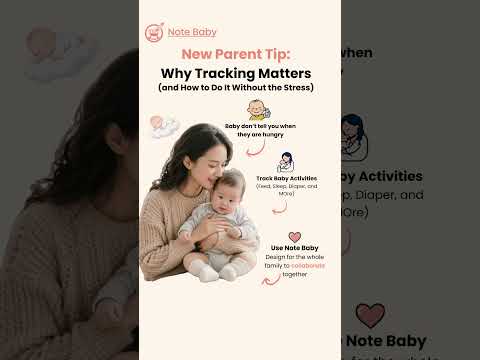
The Psychology of Tracking: From Anxiety to Empowerment
Critics often argue that tracking apps increase parental anxiety. While obsessing over every minute of sleep can be a trap, the opposite is usually true: clear data actually kills the "worry loop."
Closing the 'Worry Loop' with Objective Facts
Anxiety lives in the unknown. When you’re exhausted, your brain catastrophizes. You might feel like "the baby hasn't slept all day," but when you look at your logs in a best baby tracking app, you see they’ve actually had three 45-minute naps.
Objective data acts as a reality check. Research on parental stress and technology shows that tools providing structure and shared information can lower the cognitive load on primary caregivers. When the info is in the app, it doesn't have to take up space in your head.
The Utility Test: When to Put the Phone Down
If tracking is making you cry, stop. The app is a tool for you; you aren't its servant. I always recommend the Utility Test: If you aren't going to use the data to make a decision or talk to a doctor, and the act of logging is stressing you out, skip it. You don't need a PhD in data science to be a great parent.
Decoding the Data: Reading Between the Lines of Feeding and Sleep
Once you have a week of data, patterns emerge that aren't obvious in the moment. This is where the real value of a baby tracking app lies.
The Anatomy of a Growth Spurt
Is your baby suddenly a bottomless pit? Before you worry that your supply has dropped or the formula isn’t enough, check the trend line. Growth spurts usually look like a sharp uptick in feeding frequency, often with a side of sleep disruption. The Cleveland Clinic notes these spurts typically hit at 2, 3, and 6 weeks, and 3, 6, and 9 months. If your app shows a 20% increase in feeding over 48 hours, you aren’t doing anything wrong—your baby is just building a bigger body.
Witching Hour vs. Reflux: Spotting the Difference
Most babies have a "witching hour"—that late-afternoon period where they’re just... done. But how do you know if it’s normal fussiness or something like Silent Reflux? Use your timestamps to look for triggers:
- Witching Hour: Usually happens at the same time every day, regardless of when they last ate or slept.
- Reflux/Sensitivities: Fussiness usually peaks 20-30 minutes after a feeding or happens every time they are laid flat.
With these logs, you can give your pediatrician a clear pattern instead of a vague "he cries a lot." For specifics on reflux symptoms, look for coughing or arching during feeds.
The Pediatrician Protocol: How to Present Data for Better Care
Most pediatric visits are a blur. You get maybe 15 minutes. If you spend 10 of those trying to remember how many wet diapers the baby had on Tuesday, you’ve wasted the visit. Using a newborn tracker ensures you have the answers at your fingertips.
The S.A.T. Method: Your 2-Minute Update
Don’t hand your phone to the doctor; they don't want to scroll. Instead, use the S.A.T. Method to summarize your data:
- Summary: "Over the last week, she's averaging 28 ounces over 7 feedings and 13 hours of total sleep."
- Anomalies: "However, on Tuesday and Thursday, she had significant spit-up and only managed 20 ounces."
- Trends: "I’ve noticed the spit-ups always happen after the 6:00 PM feeding when we use the supplemental bottle."
This specificity is a gift to your doctor. The American Academy of Pediatrics emphasizes that clear symptoms and timelines are the foundation of good care.
Optimizing the Routine: Predicting Your Baby’s Next Move
A baby routine app isn't about forcing a schedule; it’s about predicting one based on biological needs.
Finding the 'Sweet Spot' for Nap Time
Overtired babies are notoriously hard to put down. By the time they rub their eyes, you’ve often missed the window. By looking at your sleep logs, you can identify your baby’s natural "wake windows."
If you see your 4-month-old consistently melts down after 2 hours and 15 minutes of being awake, start the wind-down at the 2-hour mark. You’re syncing with their biological clock. For more on safe infant sleep patterns, the Mayo Clinic provides excellent guidelines on what to expect at different ages.

The Co-Parenting Sync: Ending the Mental Load War
In many homes, one parent becomes the "Chief Information Officer." They know the last feeding time, the last poop color, and the nap status. This creates a massive mental load and leads to the "handover interrogation" every time the other parent takes over.
When you use a shared baby tracking app, the data is the "single source of truth." If your partner walks in and sees you’re napping, they don't have to wake you to ask if the baby is hungry; they just check the app. This reduces friction and ensures both caregivers are equally empowered.
Data Privacy in 2026: Why Security is a Health Priority
In 2026, your baby’s health data is a digital footprint that needs protection. When choosing the best baby tracker app, look beyond the interface. You want an app that treats health logs like a medical record. Avoid apps that sell "anonymized" data to marketers. This is why enterprise-grade encryption and privacy-first syncing are vital features for modern parents.
Frequently Asked Questions
Is baby tracking necessary for all parents?
No, it isn't "necessary," but it is highly beneficial for managing the mental load and identifying health patterns. If you find yourself forgetting when the last feeding was due to exhaustion, an app can provide much-needed clarity.
When should I stop tracking my baby's data?
Most parents find the most value in tracking during the first year, particularly through the newborn phase and the introduction of solids. You can stop whenever you feel the routine is established and you no longer find the data useful for making decisions.
Can a baby tracking app help with sleep training?
Yes. By identifying your baby's natural wake windows and sleep patterns through logs, you can implement sleep strategies that align with their biological needs, making the process much smoother for both parent and child.
Conclusion: Transforming Data into Joy
The goal of tracking isn’t to create a perfect spreadsheet; it’s to create more space for joy. When you know your baby is healthy because their growth charts are steady, you can stop worrying. When you use the best baby tracking app to identify exactly when the next nap is likely to happen, you can actually plan to drink a hot cup of coffee.
Use your tracker to handle the logistics so you can focus on the snuggles. The data tells you how your baby is doing, but only you can feel the magic of who they are.
Key Takeaways for the Data-Empowered Parent:
- The Utility Test: Don’t track for the sake of tracking. Use data to answer specific health or routine questions.
- The S.A.T. Method: Summarize, point out Anomalies, and identify Trends for your pediatrician visits.
- Wake Windows: Use logs to find the "sweet spot" for sleep before the overtired meltdown starts.
- Shared Responsibility: Use a synced app so both parents stay informed without the constant Q&A.